From Prototype to Podium: Selling Out
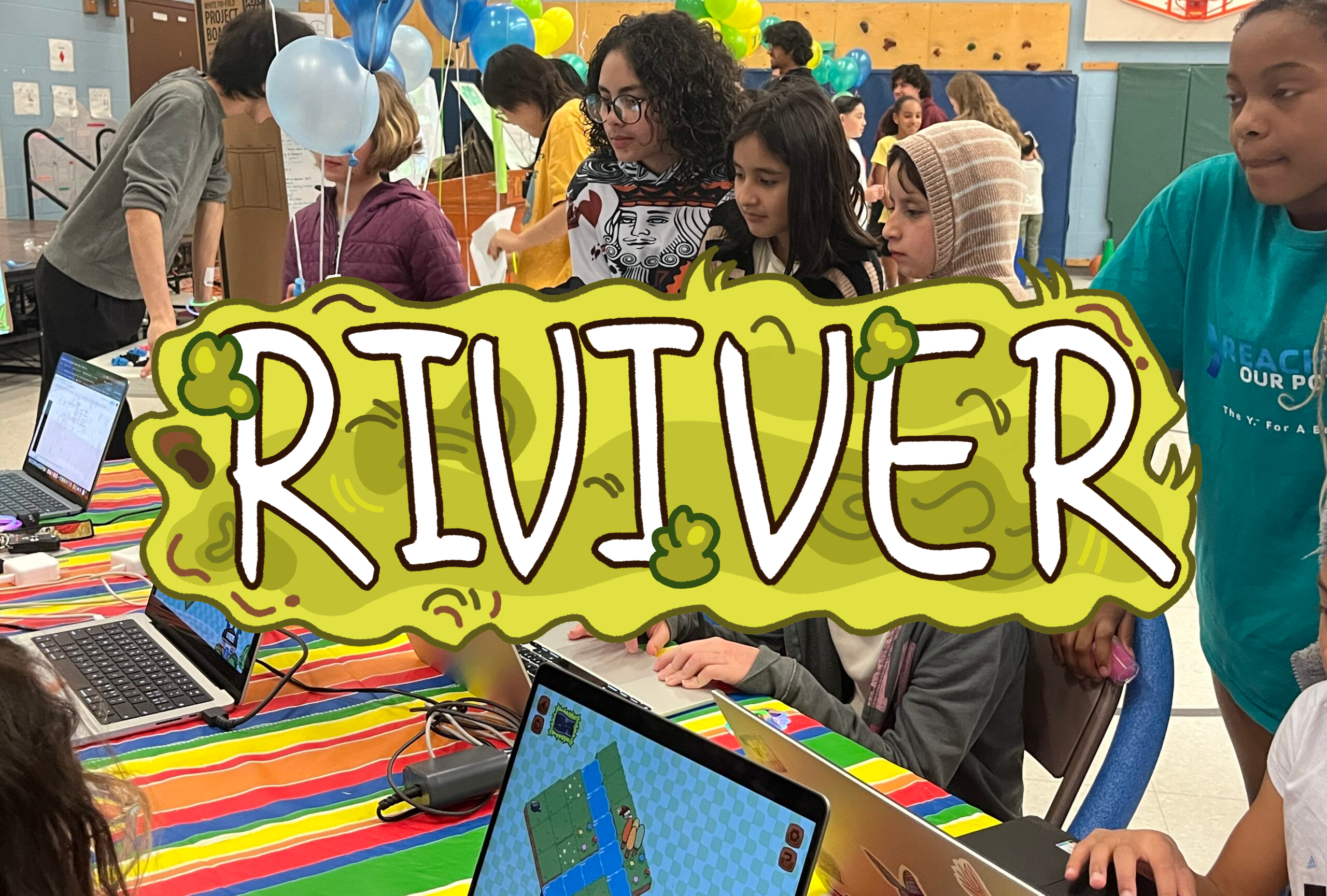
After we finished developing Riviver, our educational game aimed at 2–5th graders, my team set out to a local elementary school to showcase our game and gather feedback from kids. We needed a booth.
We had scoped out our location a few weeks beforehand. All three teams were setting up in the school’s gym. The door was in one corner of the gym; we chose the corner directly across, so kids would see us right when they walked in.
To make sure we all knew what we were doing, we split up roles between us:
- Two assistants who chaperoned the computers and invited wandering kids to our booth;
- A trivia master, who conducted a trivia game to test kids’ knowledge;
- A prize master, who managed our prize pool and handed out prizes to kids;
- An interviewer, who surveyed kids based on a questionnaire we’d constructed.
The flow we planned went: the assistants invited kids, who played either the game itself or our trivia game (which directed them to the game itself), completed the survey, and left with a prize.
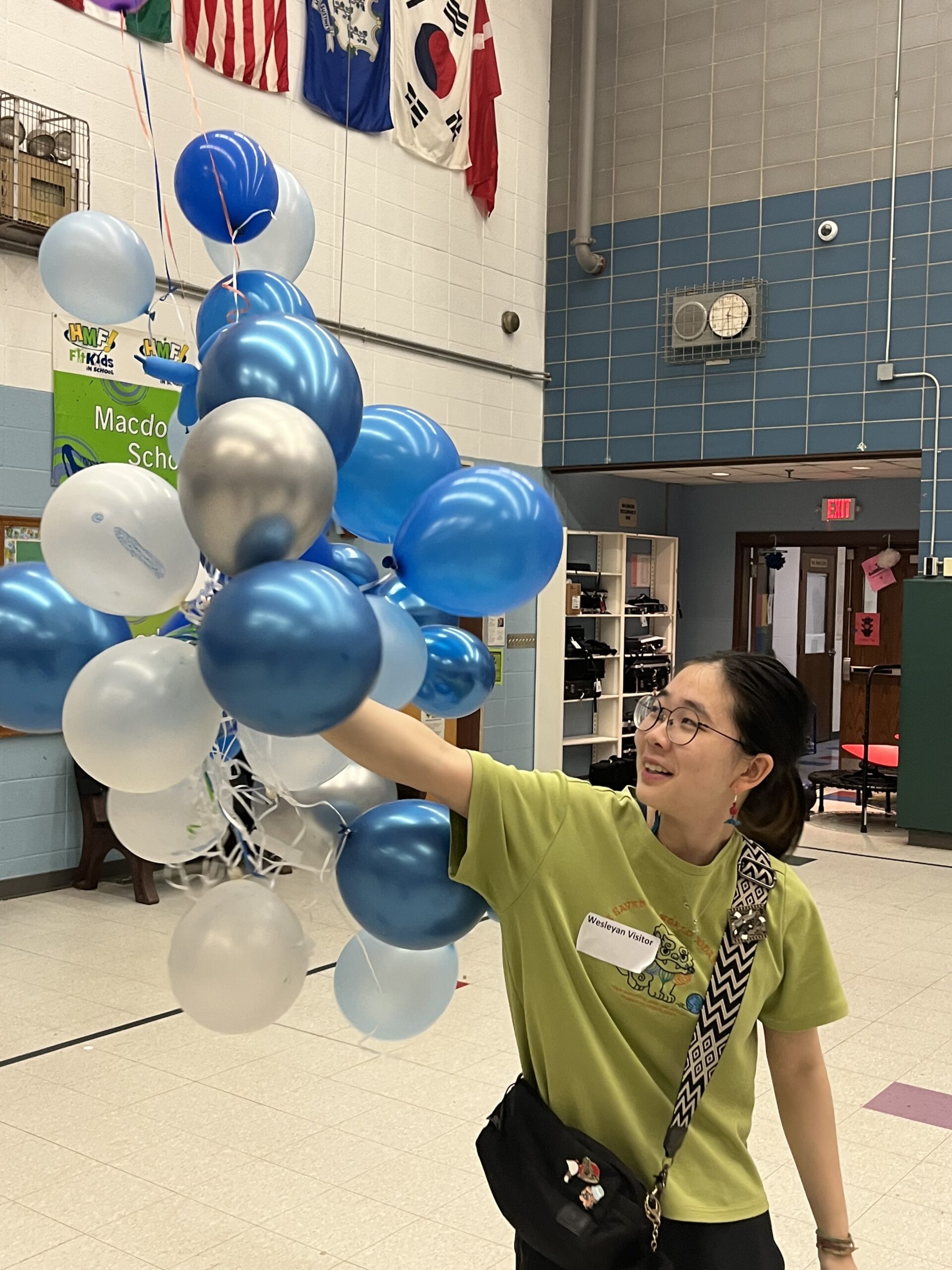
We arrived a couple hours early to set up our booth and were met with two empty tables. We used one for demos of our game and the other for drawing interest; we tried to catch the eye with balloon arches and various prizes.
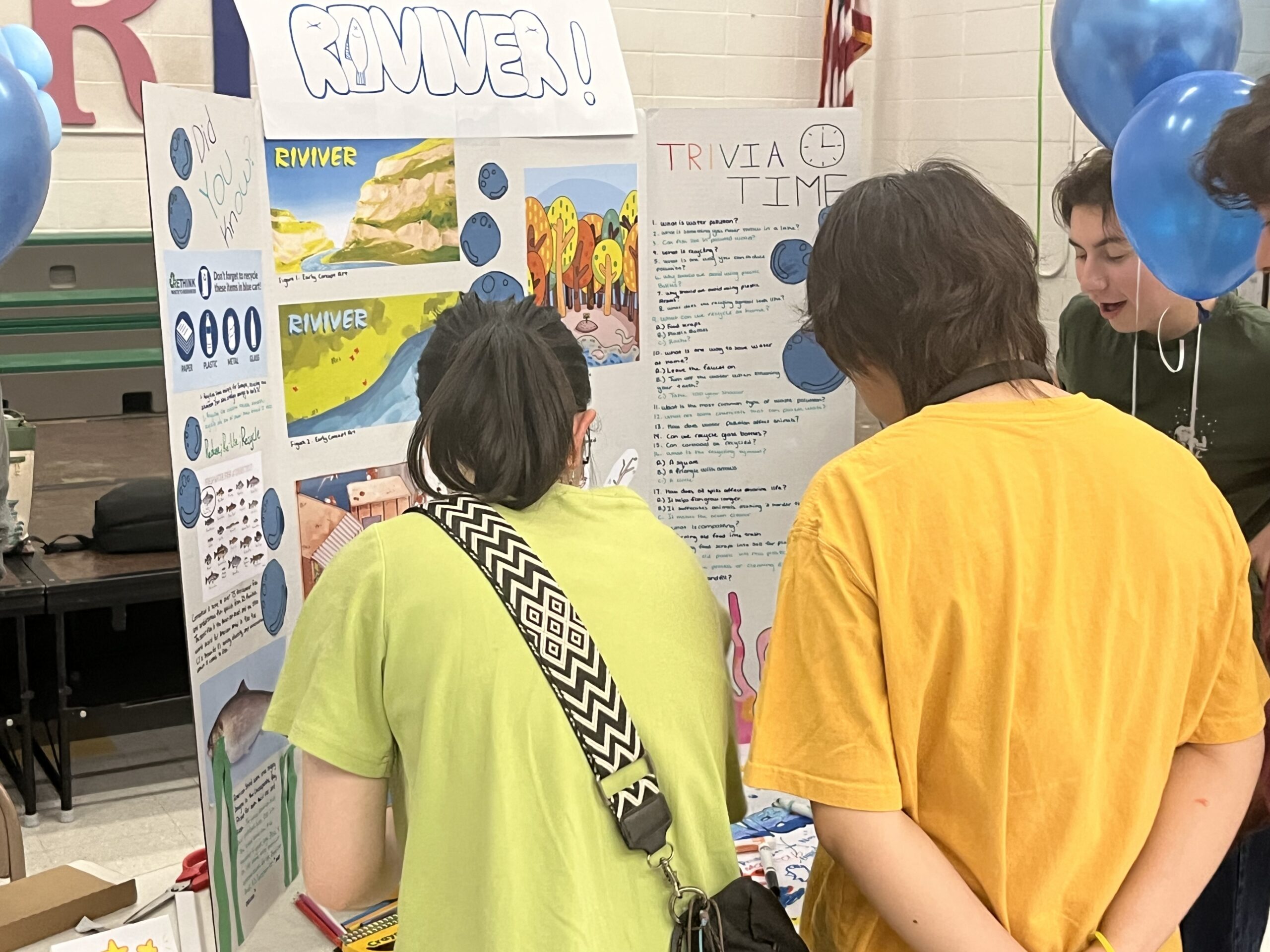
We set out a large empty sheet of paper with colored markers, encouraging kids to draw or leave a message. We also put up a brightly colored board with images from the game and a trivia game to test kids’ knowledge; when they got answers wrong we encouraged them to try our game to learn more. If they completed the trivia game successfully, we gave them prizes like stickers and bubble wands.
Some prizes we put more thought into. Kids could choose to take a postcard, which had a picture of the game and its title. We thought themed paraphernalia being carried around might draw more interest to our booth. We also had a small set of articulated sharks we’d 3D-printed. These were handed out solely to kids who finished the game with high scores on every level, encouraging them to engage with the game and learn from their mistakes.
We wanted to as many people playing the game simultaneously as possible; for that, we needed computers. We went through just about every tech-borrowing service on our campus and managed to scrape up only a few; we also brought some of our own computers. All in all, we had seven computers, which we set up along both sides of a table. We thought that if we set them up in close proximity, kids wouldn’t just be engaged by the game but also by the reactions of their friends playing next to them.
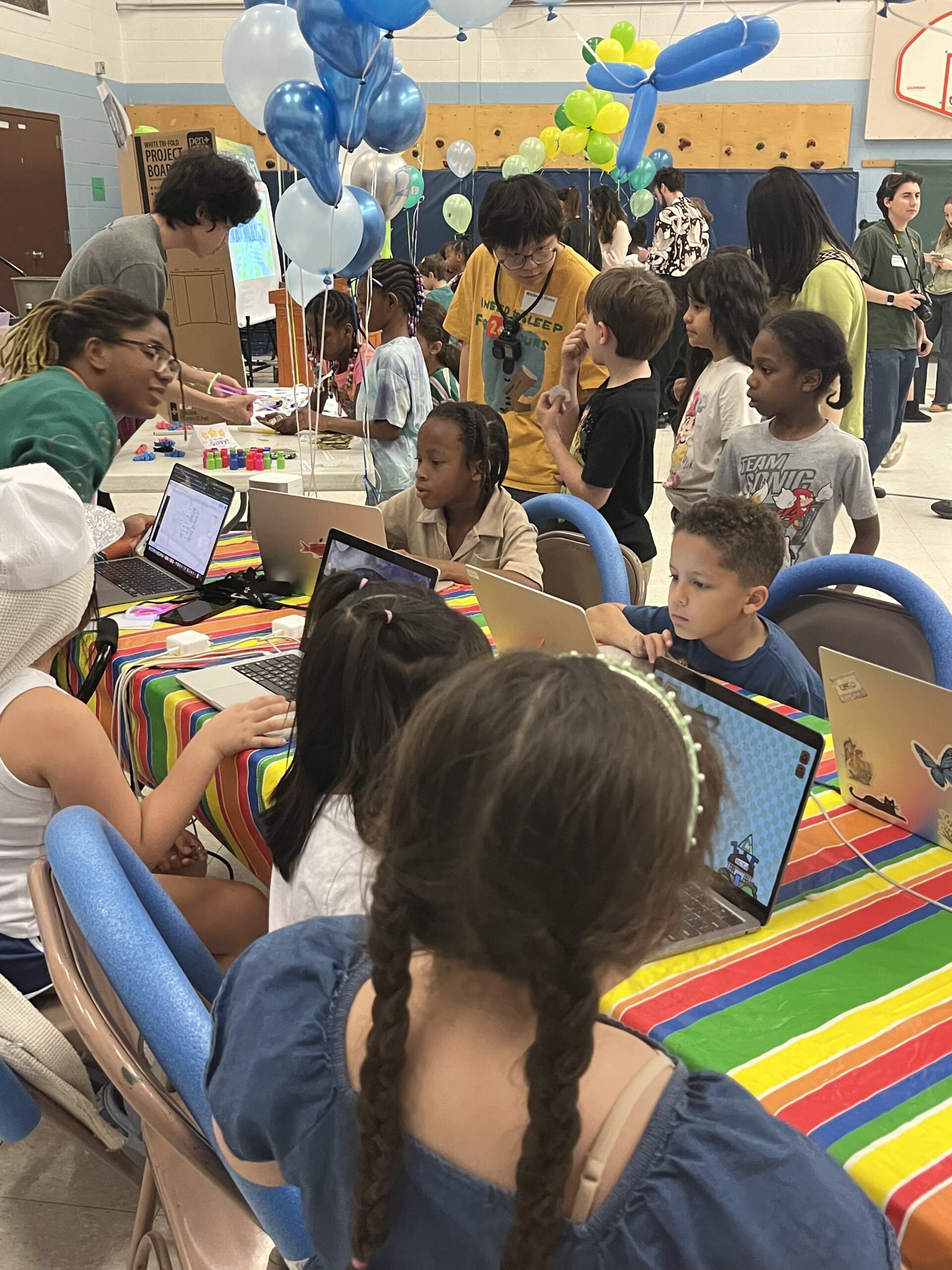
Of course, the reason we were boothing was to extract precious, precious data from our target audience. After kids played our game, we immediately directed them to our interviewer, who asked them some questions about their demographic and their experience with the game. We knew kids might be lazy to complete the survey, so we encouraged them with the promise of one of our prizes. We used a big Google sheet to jot down their answers; after the carnival, we reformatted the data into a cleaner table and used it for our final presentations.
Those presentations happened a week later — all three teams presented our games as well as feedback we’d received in front of a panel of industry-professional judges. We were judged the winning team!
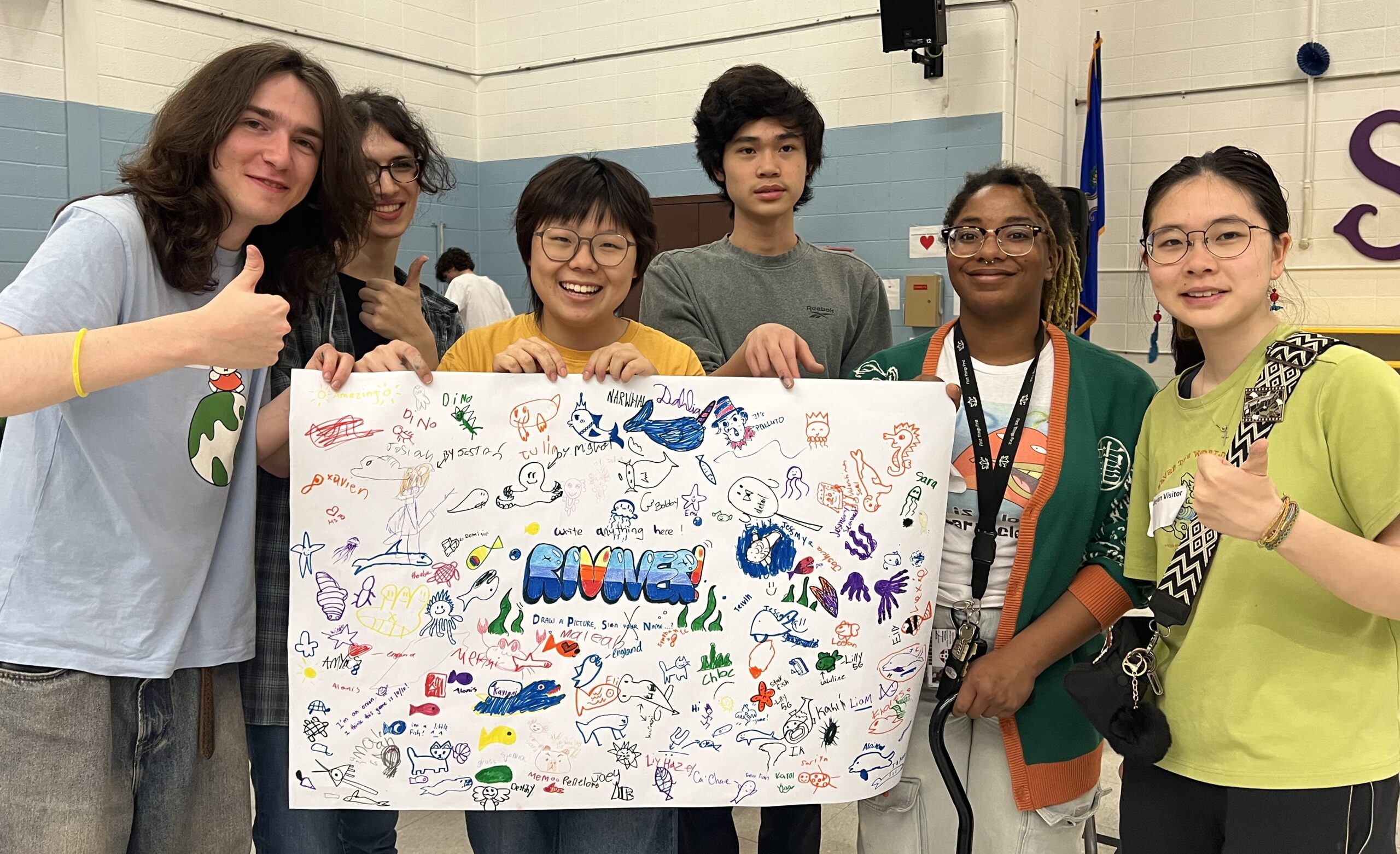
Here’s us after booth cleanup! You can see all the drawings kids made.